

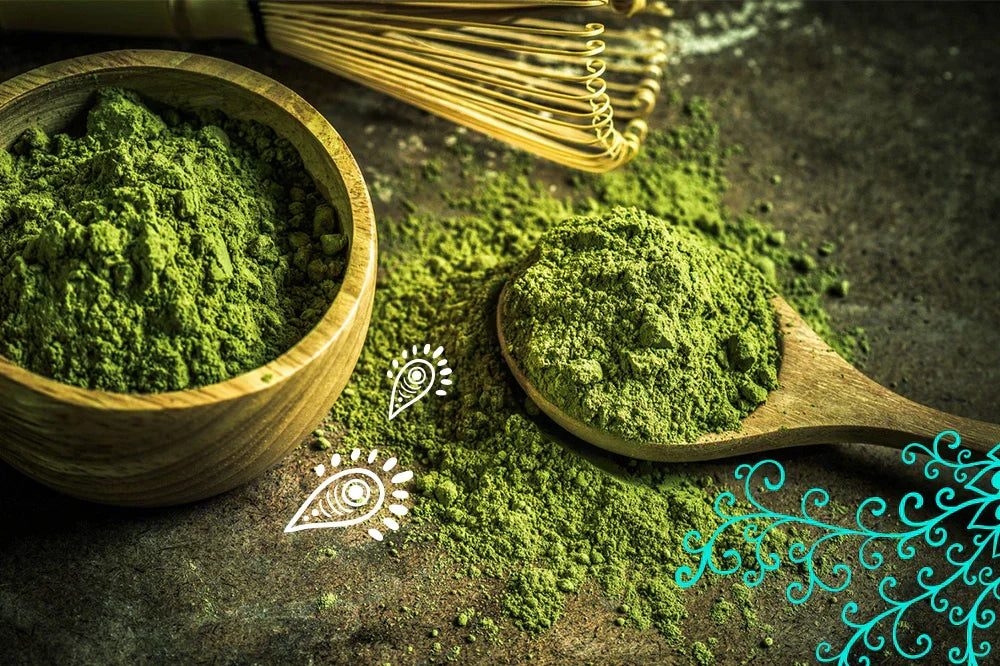
Matcha – is it really worth drinking?
The emerald depths in the bowl, the delicate aroma of seaweed, and then… a feeling of deep peace combined with crystalline clarity of mind. This is matcha – green tea that has accompanied Zen monks in meditation for centuries, and today it is winning the hearts of healthy lifestyle enthusiasts around the worldIn this article, we invite you to Japan to discover a drink that embodies the essence of nature and harmony. Discover this extraordinary fine powder that conceals the power of antioxidants and the history of ancient traditions.
What will you find in the article?
- What is matcha and where does its extraordinary power come from?
- What does matcha green tea taste like?
- What are the benefits of drinking matcha? Research-confirmed benefits
- How is matcha different from coffee?
- Matcha green tea and coffee – a comparison
- Preparation ritual – how to prepare matcha at home?
- Shake Matcha Latte – a version for busy people
- Quality and safety – how to choose the best tea?
- Why is it worth including matcha tea in your daily diet?
What is matcha and where does its extraordinary power come from?
Matcha is powdered form of Tencha tea leaves, which are shaded 3-4 weeks before harvesting (Oishita).
Unlike infusions (e.g. classic green tea), where we consume only the water extract, Drinking matcha means consuming the entire leaf blade in the form of a colloidal suspension.This provides your body with 100% of the nutrients found in the leaf, including insoluble fiber and chlorophyll.
What's more, the shading process inhibits the transformation L-theanine into catechins, which gives matcha a unique umami flavor and increases its relaxation potential.
What does matcha green tea taste like?
This question evokes many emotions. Its sensory profile is complex. Good quality Japanese matcha tea, especially the one from the first harvest (ceremonial), delights with its intense umami flavor, delicate sweetness and creamy textureYou'll detect nutty, herbal, and sometimes even floral notes.
It is worth knowing that culinary matcha tea, coming from the second or third harvest, has a more pronounced bitterness and astringency, resulting from a higher catechin content. This blend is ideal for baking, smoothies, and ice cream, where other ingredients balance its character.

What are the benefits of drinking matcha? Research-confirmed benefits
Regularly drinking matcha tea is an investment in your health. Because you consume the entire leaf in suspension, not just the infusion, you absorb a spectrum of nutrient compounds unavailable in traditional tea. Key benefits confirmed by research include:
- improved concentration and moderate agitation – Matcha induces a state of alert calmness (relaxed alertness), stabilizing energy levels for 4–6 hours without the sudden drop typical of coffee. This is due to its high concentration L-theanine (up to 45 mg/g), which promotes alpha brain waves (8-14 Hz) [1].
- reduction of anxiety and stress – high-content matcha L-theanine and arginine reduce anxiety levels and alpha-amylase activity in saliva (a marker of stress) [2]
- fat burning – matcha has a thermogenic effect and can increase fat oxidation (burning) by 17% during physical exercise [3].
- regulation of the sugar economy – its metabolic profile increases insulin sensitivity and reduces glucose absorption in the intestines, which is crucial in the prevention of diabetes [4]
- protection against atherosclerosis – Drinking matcha supports cardiovascular health. Polyphenols, especially EGCG, protect LDL cholesterol from oxidation, a key step in the formation of atherosclerotic plaque [5]
- pressure regulation – matcha stimulates the production of nitric oxide (NO) in the vascular endothelium, which improves their elasticity (vasodilation) and helps regulate blood pressure [6]
- delaying skin aging processes – high content of polyphenols increases the skin’s resistance to harmful free radicals, including those caused by excessive UV radiation [7]
- reduction of sebum secretion – EGCG contained in matcha green tea may limit excessive sebum production due to its antiandrogenic properties.
How is matcha different from coffee?
Both coffee and matcha tea stimulate you, but they do so in completely different ways. Cups of espresso provide a quick energy boost, often followed by a sharp decline in energy. (so-called caffeine crash) and irritation.
Matcha works differently. Even though it contains caffeine (even more than coffee beans per gram), it releases it gradually over 4-6 hours. This is due to the presence L-theanine – an amino acid that puts the mind in a state of "relaxed alertness" (alpha waves).
Matcha tea provides stable energy without tremors or anxiety. It's an excellent alternative for those who want to feel focused yet calm.
Matcha green tea and coffee – a comparison
| Parametr | Kawa | Matcha |
|---|---|---|
| Caffeine Profile | Slow, quickly absorbed (90-150 mg/serving) | Bound, slow-release (40-80 mg/serving) |
| Time for Action | 1-3 hours (peak -> decline) | 4-6 hours (stable plateau) |
| Effect on Cortisol | Significant increase (stress) | Moderate growth, modulated by theanine |
| Neurotransmitters | Adenosine blockade, dopamine/adrenaline increase | Increase in GABA, dopamine, serotonin, alpha waves |
| Side Effects | Anxiety, tremor, tachycardia, reflux | Rare (with excessive consumption: nausea) |
| pH (Acidity) | 4.5 - 6.0 (Acid) | 6.0 - 7.5 (Neutral) |
| Antioxidants | Chlorogenic acid (medium amount) | EGCG (very high amount) |

Preparation ritual – how to prepare matcha at home?
The traditional tea ceremony is an art, but for everyday use, you can create your own, simpler ritual. For traditional preparation you will need a bowl (chawan), bamboo chashaku spoon and whisk (chasen). How do I do it?
- Pour 1.5–2 g of matcha tea (or e.g. a product such as traditional moya matcha) into the bowl, preferably sifting it through a strainer to break up any lumps.
- Pour a small amount of water at a temperature of 70–80°C (never boiling water! – this will destroy the taste and properties of the tea).
- Whisk the tea vigorously with a whisk in a "w" motion.M” or “W” until a thick foam forms on the surface.
- Fill the container with water until it is full.
If you don't have the accessories, you can use an electric milk frother or prepare matcha in a shaker or even a bottle (cold brew method - shaken with cold water).
Remember that product freshness is key – after opening, store matcha in an airtight container, preferably in the refrigerator.
Shake Matcha Latte – a version for busy people
No time for the traditional bamboo whisk ritual? At Adalbert's Tea, we believe that luxury and harmony should be available at any time, even on the runThat's why we created the collection Mystic Asia, which redefines the way of preparing this noble drink.
It's the perfect solution for those who want to enjoy the benefits of Japanese matcha tea without sacrificing their busy day. All you need is a shaker, your favorite cold milk (or plant-based drink), and our carefully selected blend. A few vigorous shakes will produce a velvety, refreshing matcha latte with perfect foam—no lumps or complicated accessories. It's your personal, "pocket-sized" ceremony and a dose of green tea you can take with you to the gym, the office, or on the go.
Quality and safety – how to choose the best tea?
When choosing matcha tea, pay attention to its origin and certifications. The best tea comes from the Uji or Nishio regions of JapanIt's important that products are certified organic – this guarantees safety and the absence of pesticides or heavy metals that tea plants can accumulate from the soil.
Both are available on the market
- ceremonial matcha (the most expensive, to be drunk with water),
- and culinary (often the lowest price, for cocktails and dishes).
You'll sometimes hear terms like traditional matcha or luxury matcha – always check the ingredients and harvest date. Avoid "imitations" – true Japanese matcha tea is always produced through a shading process.
Why is it worth including matcha tea in your daily diet?
Adding matcha tea to your daily routine is a gesture of self-love. It's a moment to pause at the computer, a moment to breathe before a workout, or a morning ritual that sets the mood for the whole day. Whether you choose a traditional cup or a quick matcha latte in a takeaway bottle, you'll be providing your body with the best of nature.
Adalbert's Tea inspires discovery. Although our heart beats in Ceylon, we appreciate tea treasures from around the world. Matcha tea is the perfect complement to classic loose-leaf tea lovers, offering a completely new spectrum of experiences. Discover the flavors beloved by Japan and bring green energy into your home.
Bibliography:
- Unno, K., Furushima, D., Hamamoto, S., Iguchi, K., Yamada, H., Morita, A., & Horie, H. (2018). Stress-reducing function of matcha green tea in animal experiments and clinical trials. Nutrients, 10(10), 1468. https://pmc.ncbi.nlm.nih.gov/articles/PMC6213777/
- Unno, K., Furushima, D., Hamamoto, S., Iguchi, K., Yamada, H., Morita, A., & Horie, H. (2018). Stress-reducing function of matcha green tea in animal experiments and clinical trials. Nutrients, 10(10), 1468. https://pmc.ncbi.nlm.nih.gov/articles/PMC6213777/
- Liu, K., Zhou, R., Wang, B., Chen, K., Shi, L.-Y., Zhu, J.-D., & Mi, M.-T. (2013). Effect of green tea on glucose control and insulin sensitivity: A meta-analysis of 17 randomized controlled trials. The American Journal of Clinical Nutrition, 98(2), 340–348. https://doi.org/10.3945/ajcn.112.052746
- Liu, K., Zhou, R., Wang, B., Chen, K., Shi, L.-Y., Zhu, J.-D., & Mi, M.-T. (2013). Effect of green tea on glucose control and insulin sensitivity: A meta-analysis of 17 randomized controlled trials. The American Journal of Clinical Nutrition, 98(2), 340–348. https://doi.org/10.3945/ajcn.112.052746
- Sokary, S., et al. (2022). The therapeutic potential of matcha tea: A critical review on human and animal studies. Frontiers in Nutrition, 9, 1084455. https://doi.org/10.3389/fnut.2022.1084455
- Xu, Y., et al. (2021). Green tea consumption and health outcomes: An umbrella review of systematic reviews and meta-analyses. Nutrients. https://pmc.ncbi.nlm.nih.gov/articles/PMC7796401/
- Kurauchi, Y., et al. (2022). Matcha tea powder’s antidepressant-like effect through brain mechanisms in stressed mice. Nutrients. https://pmc.ncbi.nlm.nih.gov/articles/PMC9370301/
- Elmets, C. A., Singh, D., Tubesing, K., Matsui, M., Katiyar, S., & Mukhtar, H. (2001). Cutaneous photoprotection from ultraviolet injury by green tea polyphenols. JAMA Dermatology. https://jamanetwork.com/journals/jamadermatology/article-abstract/478309


Leave a comment
This site is protected by hCaptcha and the hCaptcha Privacy Policy and Terms of Service apply.