


Does Tea Dehydrate Your Body? Scientific Facts and Myths
Various myths circulate about the effects of tea on the body, but one of the main ones is its alleged dehydrating effects. Can drinking tea regularly actually cause dehydration? This myth is so damaging that we'll answer right away: it's not true. Moderate tea consumption doesn't lead to loss of valuable fluids; on the contrary, it's a valuable and safe way to hydrate your body daily.
This article was created for all those who want to find out where the myth about the dehydrating effect of tea comes from. You'll find facts backed by scientific research and concrete evidence that tea can hydrate just as well (or maybe even better?) than water :)
What will you find in the article?
Where does the belief that tea dehydrates the body come from?
The belief that tea has a dehydrating effect comes from research published over 100 years ago.
In the 1920s, it was discovered that caffeine (called theine in tea) had a diuretic effect, which became the foundation for the theory that tea was dehydrating. For decades, these facts and myths were repeated in the media, perpetuating the image of the tea as a fluid that, instead of hydrating, supposedly dehydrates the body by increasing urine production. Today we know that this belief is not confirmed by science.
Modern scientific research shows that although the caffeine in tea leaves is a mild diuretic, its effect on fluid loss is negligible. For tea to be truly dehydrating, its quantity would have to be huge – experts point out that only high doses of caffeine, exceeding 6 mg per kilogram of body weight, can actually disturb hydration.
Scientific fact
This means that we would have to consume more than 3 liters of strong infusion per day for the tea to dehydrate us to a degree that would be noticeable to our health.
Does tea hydrate as well as water?
Scientific research from 2016 showed that tea – both black and green tea – have hydrating properties almost identical to pure water. Every cup we enjoy provides us with valuable fluids, and caffeine in moderate amounts does not negate these benefits [1].
A cup of tea is made up of over 99% water. Tea hydrates while providing the body with antioxidants and other valuable nutrients that can improve overall health.
The most important conclusion
Teas – both black and green tea – have hydrating properties almost identical to pure water.
Which tea hydrates the body the most?
Since we can dismiss the alleged dehydration as a myth, let's consider the key question: which tea hydrates best? The research analysis leads to the following conclusions:
- Herbal and decaffeinated teas (such as mint, chamomile, rooibos, and fruit infusions) are considered the most hydrating because they don't contain caffeine. Each cup of such tea is essentially a cup of water with added herbs, meaning it fully hydrates the body without any diuretic effect.
- Traditional teas (Black, green, white), although they contain theine (caffeine), in moderate amounts hydrate the body just as effectively as pure water. Studies have shown that their hydrating properties are almost identical, and you can also enjoy their beneficial properties, such as antioxidants and improved circulation.
Does drinking tea have a diuretic effect?
Another common myth is that physical activity precludes drinking tea due to its supposed diuretic effect. Scientific research debunks this belief: caffeine consumed before exercise does not increase diuresis during exercise, as the body effectively retains fluids [2]. Therefore, we can enjoy tea without guilt before a walk or yoga, drawing energy and focus from it.
Myth busted
Drinking tea before training does not increase fluid loss.
Does Tea Dehydrate You? Summary
Modern research proves that tea has no negative impact on the body's water balance, and its diuretic effects are greatly exaggerated. Furthermore, regular consumption brings numerous health benefits.
- Tea hydrates as effectively as water – drinking tea regularly, both black and green, provides the body with almost the same amount of net fluids as drinking pure water.
- The myth of dehydration is a thing of the past – the belief that tea has a dehydrating effect comes from misinterpretations of studies from a century ago; modern tests prove that moderate caffeine consumption does not disturb water balance.
- Adaptation of the organism – drinking tea regularly makes the body accustomed to theine, making its possible diuretic effect almost imperceptible.
- A choice for your health and senses – Caffeine infusions are 99% water, which additionally provides the body with valuable antioxidants and polyphenols, supporting overall health. Green and black teas are a valuable source of minerals, and thanks to their low caffeine content, they can also be consumed by people with blood pressure problems.
- Safety for active people – drinking tea before training does not increase fluid loss, which makes it an ideal companion for people who care about their fitness.
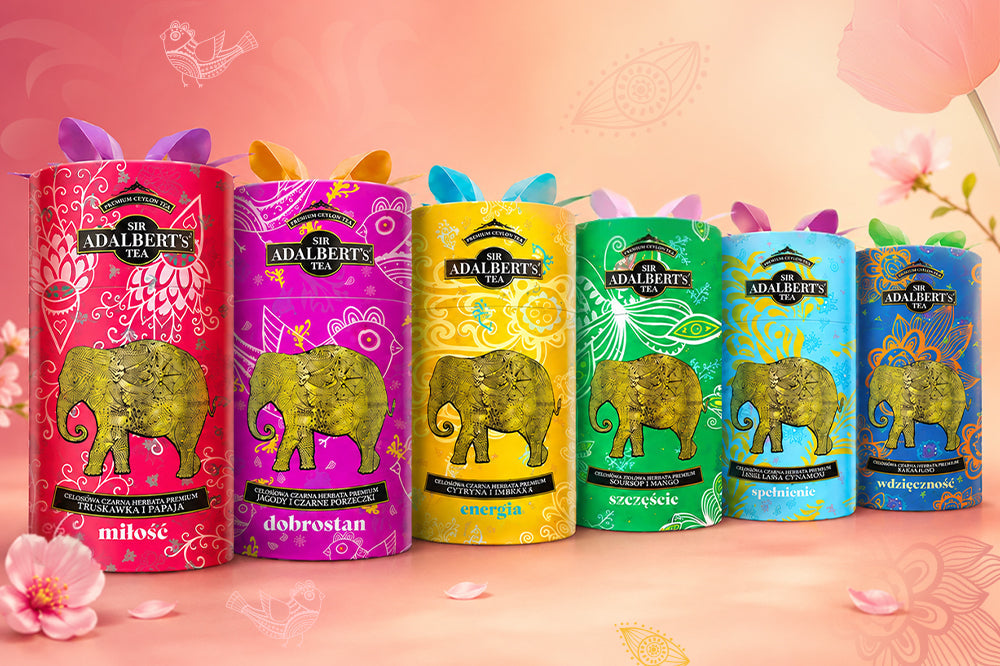
Let every cup of Adalbert's Tea be a moment of harmony and blissful relaxation. By selecting noble leaves straight from the tea gardens of Sri Lanka, you nurture not only your senses but also the proper functioning of your body. Discover your favorite blend and celebrate life, knowing that "love in every drop" also means caring for your hydration.
Bibliography
-
Maughan, R. J., Watson, P., Cordery, P. A., Walsh, N. P., Oliver, S. J., Dolci, A., Rodriguez-Sanchez, N., & Galloway, S. D. R. (2016). A randomized trial to assess the potential of different beverages to affect hydration status: Development of a beverage hydration index. American Journal of Clinical Nutrition, 103(3), 717–723. https://doi.org/10.3945/ajcn.115.114769
-
Zhang, Y., Coca, A., Casa, D. J., Antonio, J., Green, J. M., & Bishop, P. A. (2015). Caffeine and diuresis during rest and exercise: A meta-analysis. Journal of Science and Medicine in Sport, 18(5), 569–574. https://doi.org/10.1016/j.jsams.2014.07.017


Leave a comment
This site is protected by hCaptcha and the hCaptcha Privacy Policy and Terms of Service apply.