

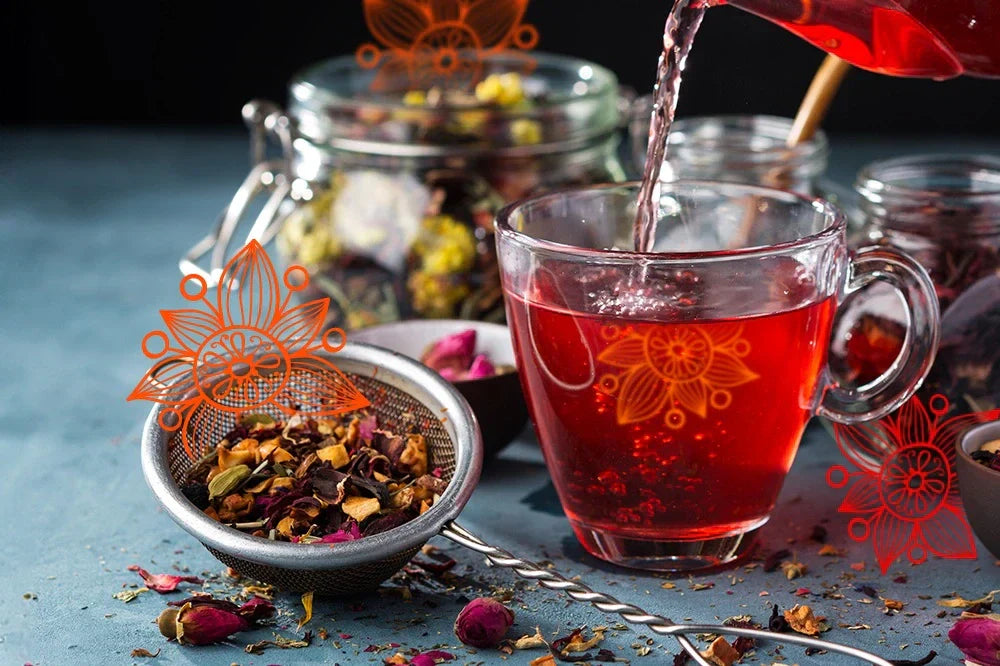
How to brew fruit tea?
Brewing fruit tea only seems simple at first glance. Just hot water and your favorite blend? Not necessarily. How you brew fruit tea has a huge impact on its flavor, aroma, and the properties that end up in your cup. Too high a water temperature or incorrect brewing time can cause the infusion to become sour, flat, or lack the natural sweetness of the fruit.
The key to the perfect fruit tea is understanding its composition. The same name encompasses completely different products – from loose-leaf teas with fruit to dried fruit blends without tea leaves. Each requires a different approach when brewing. Therefore, before you reach for the kettle, it's worth knowing what type of tea you're dealing with and how to extract the best from it.
What will you find in the article?
What exactly is real fruit tea?
Before learning how to brew fruit tea, it's worth understanding what's in your infusion. Around the world, this term encompasses two types of beverages.
- The first is classic black tea or green tea with the addition of fruit., flower petals or natural aromas.
- The second one is fruit mixtures, which do not contain tea bush leaves (Camellia sinensis), but only compositions of dried fruits, berries and herbs.
It's worth knowing
Each of these blends requires a different approach when brewing. The composition determines the water temperature and brewing time.
How to properly brew fruit tea?
How to brew fruit tea depends on its composition.
If your blend is tea-based (e.g. black tea with fruit), the water temperature is crucial.
Fruit tea based on black tea
To properly brew black tea, use water at a temperature of approximately 95°C. Brewing should take three to five minutes to make the infusion intense but not overly tart.
Fruit tea based on green tea
If your fruit tea has a green tea base, the water temperature should be 70–80°C, and brewing tea should not exceed 2–3 minutes
Find out: How to brew green tea?
Fruit tea without tea leaves
To prepare dried fruit tea, pour hot water at a temperature of 95-98°C over itCover and steep for 6 to 8 minutes to bring out the natural sweetness of the fruit.
Why not pour boiling water over tea?
Too high a temperature can cause the delicate tea leaves to “burn,” causing the infusion to become bitter and lose its subtle flavor notes. Even in the case of a fruit mixture based solely on dried fruit (e.g. with the addition of hibiscus, rosehip or cranberry), boiling water is not the best ally.
The use of water at a temperature of 100°C causes so-called "thermal shock" in dried fruit. Instead of slowly releasing the essence, boiling water rapidly "closes" the fruit's structure, allowing mainly organic acids to pass into the water, making the drink too acidic. To preserve the vitamins and natural sweetness of the mango or pineapple, the water temperature should be slightly lower. The steeping time can be extended to up to 10 minutes to allow the fruit to fully release its aroma and flavor.

Step-by-step brewing ritual
Brewing is a moment of self-care. To prepare the perfect drink, it's worth preparing the right jug or mug and your favorite accessories.
- Measure the appropriate amount of dried herb – usually it is one teaspoon per cup
- Place the herb in the infuserso that after the appropriate time the leaves and fruit can be easily separated from the liquid
- Pour water over the dried herbs at a temperature adapted to the type of tea
- Cover the jugso that the aroma does not escape during brewing
- After brewing, remove the leaves and fruit. – brewing tea for too long may negatively affect the taste
It's worth remembering that brewing loose tea allows the ingredients to develop freely, which is especially important when the mixture contains large pieces of dried fruit or whole flower petals.
Is drinking fruit tea every day healthy?
Definitely yes! This is a question that science answers in the affirmative. Fruit teas are rich in vitamins and trace elements. For example, raspberry tea or rosehip infusions are valued for their high vitamin C content, which supports immunity in cold weather.
Moreover, fruit teas made from dried fruit without tea leaves do not contain caffeine, so can be safely consumed by children and seniors at any time of the day.
Drinking fruit tea regularly is also a great way to hydrate your bodyResearch shows that fruit infusions hydrate just as effectively as water, and their pleasant taste makes it easier to maintain adequate fluid intake.
Fruit inspirations for every occasion
Fruit tea offers a huge scope for culinary discoveries.
- On cold days, loose-leaf tea with fruit and spices will warm you from the inside. Our winter compositions, in which Ceylon tea leaves are accompanied by cinnamon, cloves or even strawberries, are perfect.
- On hot days, fruit tea is perfect served cold. Prepare the infusion as usual, let it cool and serve with ice cubes, fresh mint and mango or pineapple pieces.
You can experiment by adding a bit of honey or a slice of lemon to the tea, which will further enhance its intense flavor.
Brewing fruit tea – summary
| Parameter | Black tea with fruit | Green tea with fruit | Fruit mixtures (without leaves) |
|---|---|---|---|
| Optimal temperature | ok. 95°C | 70–80°C | 95–98°C |
| Brewing time | 3–5 minutes | 2–3 minutes | 6–8 minutes |
| Amount of dried herb | 1 teaspoon per cup | 1 teaspoon per cup | 1 teaspoon per cup |
| Water | Soft, filtered | Soft, filtered | Soft, filtered |
Brewing fruit tea is the art of savoring every drop. It's a time to forget about rushing and let the aroma of the tropics envelop your senses. Whether you choose raspberry tea, a blend with hibiscus, or a refined white mango tea, remember that brewing tea properly means showing yourself care.
We believe that every cup of Adalbert's Tea brings a touch of magic to your everyday life. Discover the richness of our blends, from blackcurrant to exotic pineapple, and create your own unique brewing ritual that will soothe your body and soul.


Leave a comment
This site is protected by hCaptcha and the hCaptcha Privacy Policy and Terms of Service apply.